Introduction
Your website may have excellent content, but if those pages sit apart from one another, you're leaving valuable SEO opportunities on the table.
An internal linking strategy connects related pages so readers can move naturally from one useful resource to the next. It also helps search engines understand which topics your website covers and how your pages relate to each other. Think of internal links as the signposts inside your website. They tell readers where to go next and give search engines more context about your content.
For brands using On-Page SEO Services in Mumbai, or a wider digital marketing plan, internal linking can help create a better website structure, improve topic relevance, increase organic visibility, boost engagement, and lead to more conversions.
The best part? You don't always need more content. Sometimes, you simply need to connect the content you already have more intelligently.
Table of Contents |
What Is an Internal Linking Strategy? |
Why Internal Links Matter for SEO |
How Internal Linking Supports Site Architecture |
Build Topic Clusters With Internal Links |
Choose the Right Anchor Text |
Connect Informational and Commercial Pages |
Find Internal Linking Opportunities |
Create an Internal Linking Workflow |
Common Internal Linking Examples |
Frequently Asked Questions |
Key Takeaways |
Conclusion |
Contact Us |
Related Article |
What Is an Internal Linking Strategy?
An internal linking strategy is a planned way to connect relevant pages within your website.
Unlike external links, which point to another website, internal links keep visitors within your own content ecosystem.
A visitor might start with a blog post about SEO content refreshes, move to a guide about search intent, explore a technical SEO resource, and then discover relevant SEO services in Mumbai. That journey feels natural because each page answers the next logical question. From an SEO perspective, internal links can also help search engines find pages, understand relationships between topics, and identify important pages within your website structure. The keyword is relevant.
Adding links simply to increase the number of links on a page doesn't create a useful strategy. The connection should make sense within the surrounding content.
Why Internal Links Matter for SEO
Internal links perform several jobs at once. They help readers discover useful resources. They create relationships between related pages. They help search engines understand your website structure. They can also guide visitors toward pages that matter most to your business.
Imagine publishing an excellent guide about technical SEO. That guide could naturally link to your technical SEO service page, a Core Web Vitals article, a website speed guide, and a technical SEO audit checklist.
Now one page becomes a doorway into a larger group of relevant information.
Google's SEO guidance recommends descriptive anchor text for internal links and encourages site owners to ensure important pages are linked from other relevant pages on the website. That makes internal linking both an SEO consideration and a user-experience opportunity.
How Internal Linking Supports Site Architecture
A well-structured website makes relationships between pages easy to understand.
Your homepage might connect to primary service pages. Those service pages can connect to relevant industry pages and supporting resources.
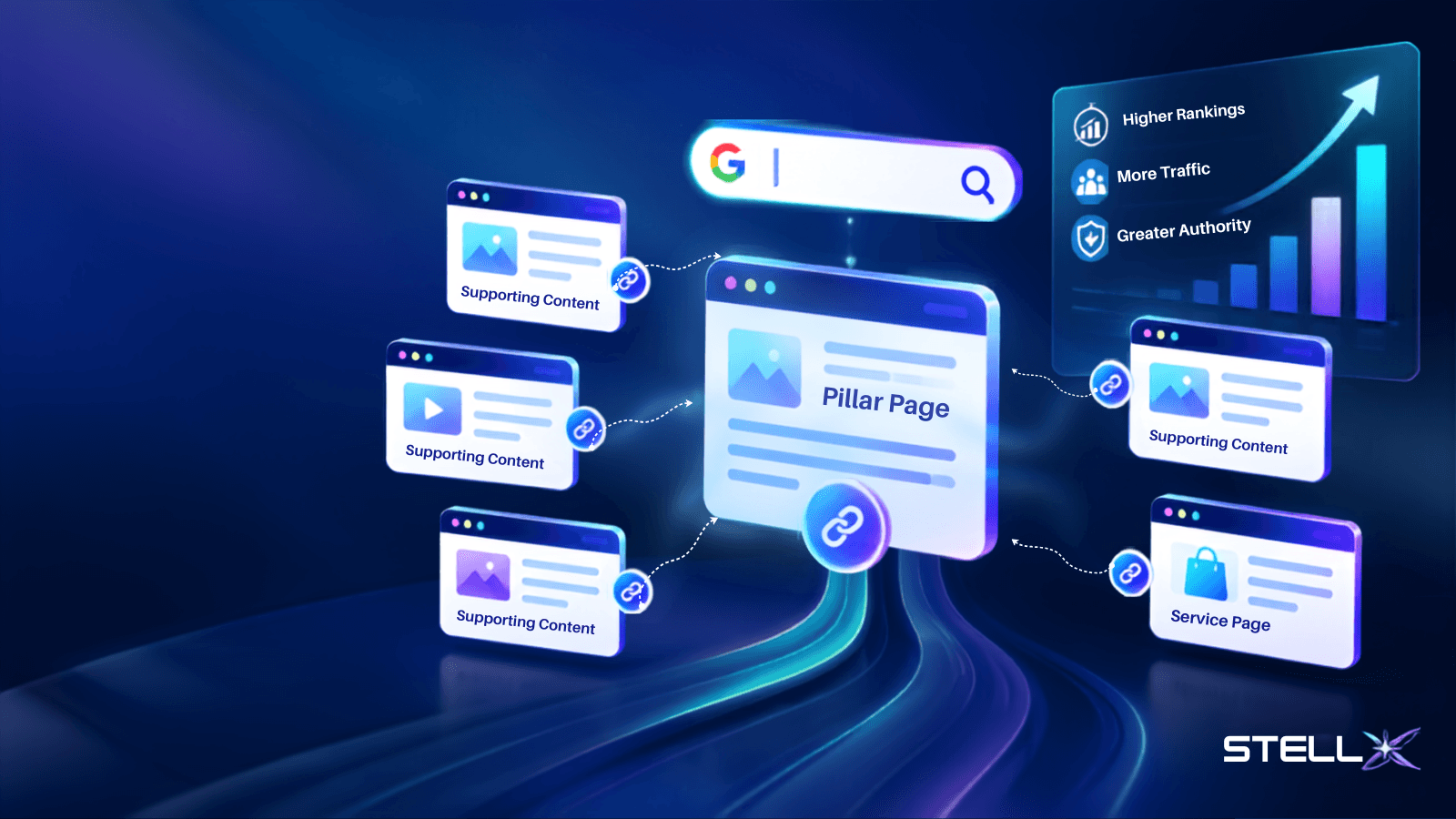
Blog articles can then connect back to services and deeper educational content. This creates a clear path through the website. For example, a digital marketing website could have a central SEO service page supported by articles about technical SEO, search intent, content refreshes, keyword research, internal linking, AI search, and Core Web Vitals.
Each article doesn't need to link to every other article. Instead, connect pages when the relationship adds value. This keeps the site structure useful rather than turning every paragraph into a tiny hyperlink festival.
Build Topic Clusters With Internal Links
Internal linking becomes particularly powerful when combined with topic clusters.
A topic cluster typically includes a central page covering a broad subject and supporting pages exploring specific subtopics. Consider a website targeting SEO consulting.
The central service page could explain the overall service.
Supporting articles could cover technical SEO audits, content optimization, search intent, internal linking, SEO reporting, and organic traffic growth. These resources can connect naturally. The result is a stronger content ecosystem where each page contributes to the larger subject.
A new article can also be added to an existing topical ecosystem rather than becoming a standalone asset. This approach helps your website grow in a structured way.
Choose the Right Anchor Text
Anchor text is the clickable wording used for an internal link.
Good anchor text tells readers what they will find after clicking. For example, a technical SEO article could link to a relevant page using phrases such as technical SEO strategy, technical SEO guide, or improving technical website performance, depending on the surrounding sentence. The anchor should read naturally. You don't need to force an exact-match keyword every time.
Imagine this sentence:
"Before improving page speed, review your technical SEO strategy to understand how performance fits into the wider website architecture." The link provides context without interrupting the reading experience. That is the goal.
Connect Informational and Commercial Pages
One of the most valuable opportunities in internal linking is connecting educational content with relevant commercial pages.
A reader may discover your blog while researching a problem. They aren't necessarily ready to contact a business immediately. Give them useful information first. Then, when the topic naturally leads toward professional support, provide a relevant next step. For example, an article explaining how to perform a technical SEO audit could naturally reference a technical SEO consulting service.
A guide about content refreshes could link to an SEO consulting page.
An article about website architecture could connect to a website development service.
This creates a smoother journey from
Impression → Click → Session → Engagement → Brand Interaction → Conversion
The link isn't an advertisement. It is the next useful resource.
Find Internal Linking Opportunities
A practical internal link audit can reveal valuable opportunities across your website. Look for pages receiving strong organic traffic but offering few relevant links to other resources.
Review important service pages and identify relevant articles that could reference them.
Check for orphan pages, which are webpages without meaningful internal links pointing to them from other pages on the same website. Also review links pointing toward outdated URLs or pages that have since been replaced.
Search your own website for relevant topics. For example, if you have published a new article about AI search, search your existing content for related discussions around AEO, search intent, structured data, AI overviews, technical SEO, and AI traffic measurement. Those older pages may offer natural opportunities to introduce the new resource.
Create an Internal Linking Workflow
Internal linking works best when it becomes part of your publishing process.
When a new article is published, identify a few existing pages that are genuinely relevant. Then look at the new article itself.
Which existing service pages or educational resources would help someone understand the subject more deeply?
Add those links naturally.
URLs are updated.
New content gets published.
Important service pages evolve.
Your website grows. That means your internal linking structure should grow with it.
Review internal links periodically, especially as your website grows, new content is published, URLs change, or important service pages are updated.
For businesses investing in professional SEO services, SEO consulting services, or broader digital marketing strategy, internal linking should be treated as part of the website's information architecture rather than an afterthought.
Common Internal Linking Examples
Imagine a blog about SEO content refreshes. Within that article, a natural link could point to a resource about search intent. That search-intent article could then connect to a guide about keyword research. The keyword research guide could reference a relevant SEO consulting service.
Another example is an article about website speed. It could naturally connect to content about Core Web Vitals, technical SEO, website development, and conversion optimization.
An article about AI search could connect to resources covering AEO, conversational search, structured data, AI overviews, and AI traffic measurement. Each connection creates a reason for the reader to continue exploring.
A Content Refresh Is a Great Time to Add Internal Links
Refreshing an existing article creates a particularly useful internal linking opportunity.
As you update information, you may discover newer articles, improved service pages, or related resources that didn't exist when the original article was published.
Connect them.
A content refresh becomes considerably more valuable when refreshed pages are connected to relevant resources across your website. For example, if you refresh an article about SEO content strategy, you could add contextual links to newer content covering search intent, content gaps, technical SEO, AI search, or conversion optimization. This turns an older page into a stronger entry point within your current content ecosystem.
Frequently Asked Questions
What is internal linking in SEO?
Internal linking is the practice of linking one page on your website to another relevant page on the same website. It supports navigation, content relationships, site structure, and SEO.
How many internal links should a page have?
There is no universal number. Add internal links where they genuinely help readers understand the topic or discover relevant information.
Does internal linking improve SEO rankings?
Internal links can help search engines understand page relationships and site structure while helping users discover important content. They are one part of a broader SEO strategy.
What makes good internal link anchor text?
Good anchor text is descriptive, concise, and relevant to the destination page. It should fit naturally within the surrounding sentence.
What are orphan pages?
Orphan pages are webpages that have no meaningful internal links pointing to them from other pages on the same website. Identifying these pages can reveal useful structural opportunities.
Should blog posts link to service pages?
Yes, when the service is genuinely relevant to the subject. A contextual link can give readers a natural path from educational information to professional support.
How often should internal links be reviewed?
Review them as your website evolves, particularly when you publish new content, update URLs, launch service pages, or refresh older articles.
Key Takeaways |
|
|
|
|
|
|
|
|
Conclusion
Strong internal linking is less about adding more links and more about creating better connections.
When related pages support one another, your website becomes easier to navigate and easier to understand. A blog can lead to a deeper guide. A guide can introduce a relevant service. A service page can direct visitors toward a consultation or inquiry. That creates a smoother journey from search discovery to meaningful brand interaction. The best internal linking strategy combines search intent, topical relevance, site architecture, useful anchor text, and a clear understanding of your customer's journey. If your website already has a growing content library, there may be valuable connections waiting to be made.
Contact Us
Your next SEO opportunity may already be published on your website.
The right internal links can connect your best content, strengthen topical relevance, guide visitors toward useful resources, and create a clearer path from search discovery to brand interaction.
Stellix brings SEO strategy, content, technical SEO, and digital growth together to help businesses build stronger search visibility. Ready to connect your content more strategically? Contact Stellix, and let's turn your website into a stronger, connected growth engine.
About Stellix
Stellix is a performance-driven digital marketing agency focused on SEO, AI search, performance marketing, website development, content strategy, and measurable business growth. The team combines data, strategy, technology, and creative thinking to help businesses strengthen organic visibility and build digital experiences that move audiences from discovery to meaningful action.