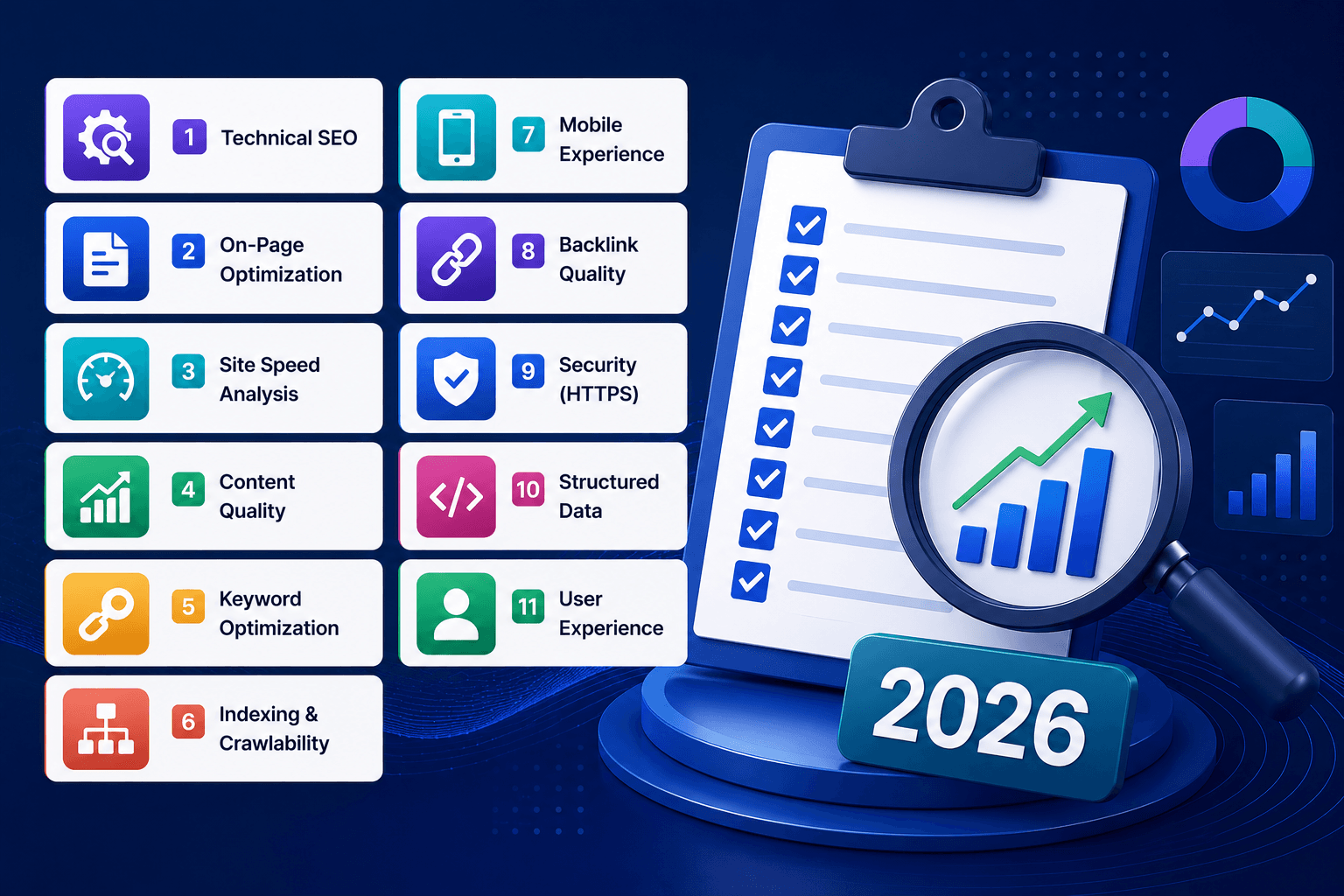
Search engines have become remarkably intelligent. They understand context, intent, user behavior, and even content quality at a level that seemed futuristic just a few years ago. Yet one thing remains surprisingly consistent: websites that perform regular SEO audits continue to outperform those that rely on guesswork.
Whether you're working with b2b content marketing agencies, investing in seo and digital marketing services, or exploring b2b seo services Mumbai, an SEO audit remains one of the most valuable activities for improving visibility, traffic, and business growth.
Think of an SEO audit as a routine health checkup for your website. Everything may appear perfectly fine on the surface, but beneath the hood, there are often opportunities waiting to be uncovered. A missing technical element here, an outdated page there, and suddenly your competitors are capturing traffic that could have been yours.
The good news? An effective SEO audit in 2026 follows a clear process. Let's walk through the exact steps.
Table of Contents
Crawlability
Indexation
Technical SEO
Internal Linking
Search Intent
Content Quality
On-Page SEO
Backlinks
User Experience
Competitor Analysis
Action Plan
Step 1: Start With Website Crawlability
Before evaluating content, keywords, or backlinks, search engines must be able to access your website efficiently.
The first step in any SEO audit is to review how search engines crawl your pages. Examine your robots.txt file, XML sitemap, indexation status, and crawl reports. Every important page should be discoverable and accessible without unnecessary barriers.
Many websites publish exceptional content yet unintentionally make it difficult for search engines to navigate key sections. It's a bit like opening a beautiful store but forgetting to unlock the front door. A proper crawlability review ensures that search engines can navigate your website smoothly and understand its structure.
Step 2: Review Indexation and Search Visibility
Once search engines can crawl your site, the next question becomes simple: are they actually indexing the pages you want them to?
Analyze indexed pages against your actual website inventory. Look for pages that deserve visibility but haven't been indexed yet. At the same time, identify low-value pages that may dilute overall website quality.
In 2026, search engines increasingly prioritize content usefulness and relevance. Ensuring that only valuable pages appear in search results helps strengthen overall site authority. This stage often reveals surprising opportunities. Businesses frequently discover important service pages receiving minimal visibility simply because search engines haven't fully understood their value.
Step 3: Why Technical SEO Problems Destroy Rankings
According to Google, page experience and Core Web Vitals continue to influence search visibility, particularly when multiple pages satisfy the same search intent.
Modern users expect websites to load quickly, function smoothly, and provide seamless experiences across devices. Search engines expect the same thing.
Example: An e-commerce site reduced Largest Contentful Paint from 4.5 seconds to 2.1 seconds and saw a 22% increase in organic traffic within three months. Every technical element contributes to how efficiently search engines interpret and rank your content.
A technically optimized website creates an environment where great content can thrive. Without that foundation, even the most insightful articles and service pages may struggle to achieve their full potential.
Step 4: The Internal Linking Mistake That Hurts Rankings
Imagine entering a library where books are scattered randomly across the floor. Finding information would be exhausting. Search engines feel the same way about poorly organized websites.
An SEO audit should examine how pages connect through internal linking. Every important page should be reachable through logical navigation and contextual links.
Strong website architecture helps search engines understand topic relationships while guiding visitors toward relevant information.
For organizations offering seo and digital marketing services, effective internal linking often becomes one of the fastest ways to strengthen authority across service pages and educational content.
Step 5: Audit Keyword Alignment and Search Intent
Keyword optimization in 2026 goes far beyond inserting phrases into headings.
Search engines now evaluate whether content genuinely satisfies user intent. This means every page should align with the reason someone searched in the first place.
Review your target keywords and compare them against page content. Determine whether users searching those terms would find complete, helpful answers.
For example, a company providing b2b seo services Mumbai should create content that addresses local business challenges, industry-specific concerns, and practical SEO solutions rather than focusing solely on keyword repetition. Intent-driven optimization creates stronger engagement signals and improves overall relevance.
Step 6: Examine Content Quality and Freshness
Content remains one of the strongest ranking factors, but quality expectations continue rising. An SEO audit should evaluate whether content remains accurate, useful, comprehensive, and aligned with current search behavior.
Review blog articles, landing pages, service pages, and resource sections. Update statistics, refresh examples, strengthen expertise, and expand sections where additional value can be provided. Fresh content signals ongoing relevance to both users and search engines.
One helpful rule: if a page still answers questions clearly and provides meaningful insights, it deserves attention and improvement rather than replacement.
Step 7: Assess On-Page SEO Elements
On-page optimization remains essential because it communicates page relevance directly to search engines.
Review title tags, meta descriptions, headings, image optimization, schema markup, and content hierarchy.
Titles should encourage clicks while clearly describing page topics. Meta descriptions should provide compelling summaries that motivate users to visit.
Every heading should guide readers naturally through the content while reinforcing topical relevance. When combined effectively, these elements create a stronger connection between search intent and page content.
Step 8: Why Google Ignores Some Pages Completely
Backlinks continue to act as trust signals within search algorithms. An SEO audit should analyze the quality, relevance, and diversity of referring domains pointing to your website. Focus on links from authoritative and industry-relevant sources. Quality matters far more than quantity.
Businesses working alongside b2b content marketing agencies often discover that valuable thought leadership content naturally attracts stronger backlinks over time. A healthy backlink profile supports credibility, strengthens rankings, and improves overall domain authority.
Step 9: Why Poor User Experience Impacts SEO
SEO and user experience have become increasingly interconnected. Search engines evaluate behavioral indicators such as engagement, navigation efficiency, and content usefulness. Review page layouts, readability, navigation flow, mobile responsiveness, and user journeys.
Ask a simple question: can visitors quickly find what they need? When users enjoy interacting with your website, search engines receive positive signals that reinforce content quality and relevance.
Step 10: What Your Competitors Know That You Don't
An SEO audit becomes significantly more valuable when viewed within a competitive context. Analyze competitor rankings, content strategies, keyword coverage, backlink profiles, and technical strengths. This process reveals opportunities that may otherwise remain hidden.
Competitor analysis isn't about imitation. It's about identifying gaps, discovering emerging trends, and understanding where your website can provide even greater value. The most successful brands consistently learn from market leaders while creating their own distinct advantages.
Step 11: Measure, Prioritize, and Create an Action Plan
The final step transforms observations into results.
After completing your audit, categorize findings based on impact and implementation effort. Technical improvements, content updates, internal linking opportunities, and authority-building initiatives should be organized into a clear roadmap.
An SEO audit only delivers value when insights lead to action. The websites that achieve sustainable growth are rarely the ones making dramatic changes overnight. They're the ones making consistent improvements based on data-driven observations.
SEO audits are no longer just about fixing broken links or updating title tags. In 2026, a successful audit requires evaluating technical performance, content quality, user experience, search intent, and even visibility across AI-powered search platforms.
The websites that consistently grow organic traffic aren't necessarily publishing more content than their competitors. They're regularly identifying weaknesses, fixing missed opportunities, and improving the pages that matter most.
Whether you're managing a small business website or a large enterprise platform, conducting regular SEO audits helps ensure your site remains visible, competitive, and aligned with how people search today.
The best time to perform an SEO audit is before rankings decline, not after. By following the checklist outlined in this guide, you'll be better positioned to uncover growth opportunities, improve search visibility, and build sustainable organic traffic in 2026 and beyond.
Need an Expert SEO Audit?
Discover the technical issues, content gaps, and ranking opportunities preventing your website from reaching its full potential.
Book an SEO Audit Consultation now!
Frequently Asked Questions
What is an SEO audit?
An SEO audit is a comprehensive evaluation of a website's technical performance, content quality, keyword alignment, user experience, and authority signals to identify opportunities for improved search visibility.
What should be included in an SEO audit?
A complete SEO audit should review crawlability, indexation, technical SEO, Core Web Vitals, content quality, keyword targeting, internal linking, backlinks, user experience, and AI search visibility.
How do I perform an SEO audit step by step?
Start by analyzing crawlability and indexation, then review technical SEO, content quality, keyword alignment, backlinks, internal linking, and competitor performance. Finally, prioritize findings and create an implementation plan.
Why is technical SEO important in an audit?
Technical SEO helps search engines crawl, understand, and index your website efficiently, creating a strong foundation for rankings and visibility.
What is the best SEO audit tool in 2026?
Most SEO professionals use a combination of Google Search Console, Google Analytics, Screaming Frog, Ahrefs, Semrush, and PageSpeed Insights to perform comprehensive SEO audits.
How much does an SEO audit cost?
SEO audit costs vary depending on website size and complexity. Small business audits may cost a few hundred dollars, while enterprise-level audits can range into several thousand dollars.
Are backlinks still important for SEO in 2026?
Absolutely. High-quality backlinks continue to serve as important trust and authority signals that support stronger search performance.
Related SEO Resources: How to Improve Google Rankings