Introduction
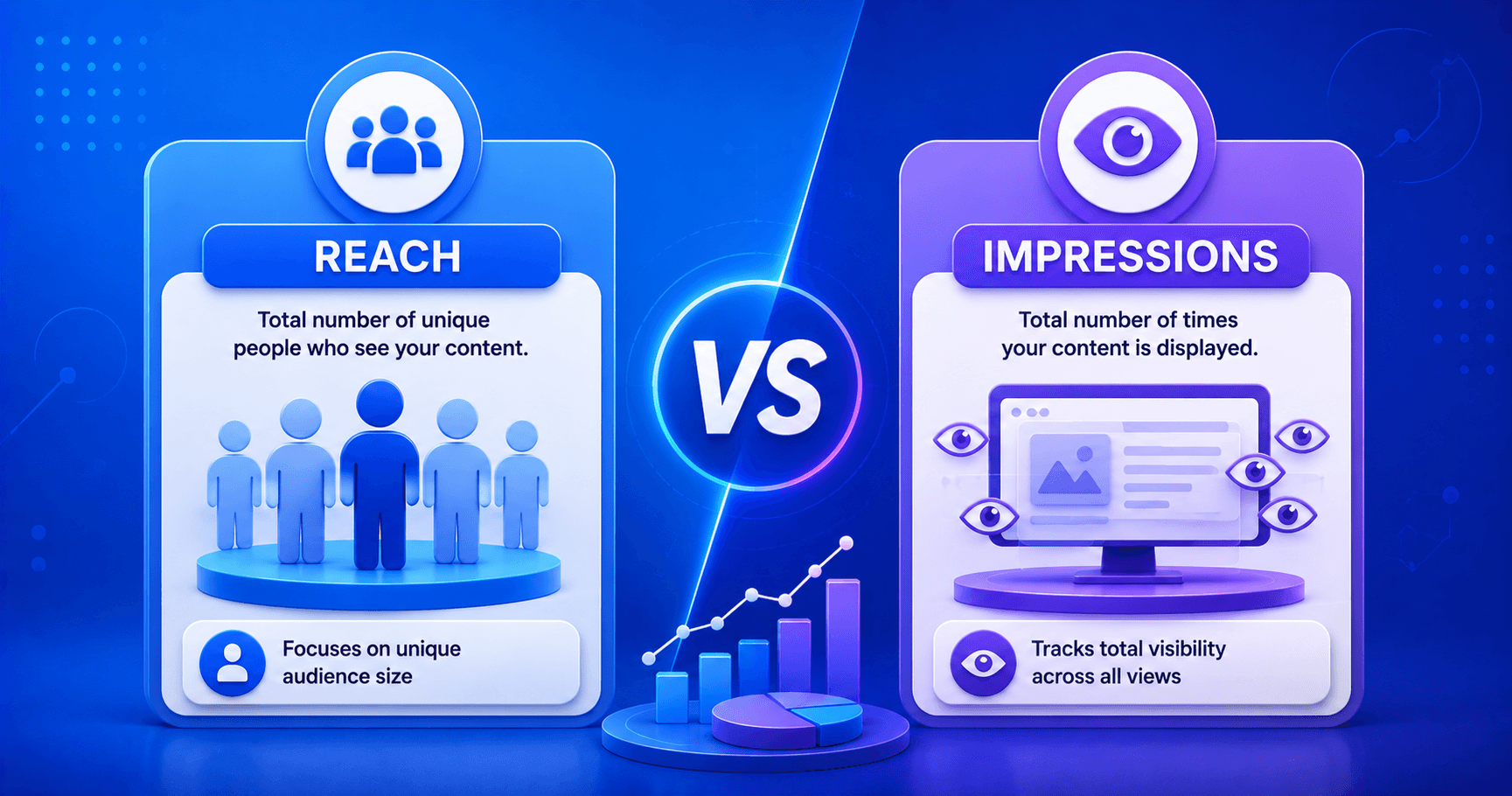
Reach and impressions are two of the most frequently discussed marketing metrics, yet they measure different aspects of campaign performance. Reach represents the number of unique people who see your content, while impressions measure the total number of times your content is displayed, including multiple views by the same person. Understanding this distinction helps marketers evaluate brand awareness, audience engagement, and campaign effectiveness with greater confidence.
Whether you're working with B2B Digital Marketing Companies, investing in Search Engine Marketing Services, or strengthening your presence through Local SEO Services Mumbai, knowing when to focus on reach, impressions, or both can help you make smarter marketing decisions and maximize every campaign.
Table of Contents
What Are Reach and Impressions?
Why These Metrics Matter More Than Ever
Reach vs Impressions: Understanding the Core Difference
Which Metric Should You Prioritize?
How Different Marketing Channels Measure Reach and Impressions
Practical Examples Every Marketer Should Know
Frequently Asked Questions
Key Takeaways
Conclusion
About Company
What Are Reach and Impressions?
Marketing dashboards are filled with numbers, but only a handful truly help shape smarter business decisions. Reach and impressions sit at the top of that list because they reveal how effectively your content is connecting with your audience. Although the two metrics often appear together, they answer very different questions.
Reach tells you how many unique people viewed your content.
Impressions tell you how many total times your content appeared on screens.
Imagine publishing a LinkedIn post promoting a new industry report.
If 1,000 professionals each see your post once, your reach is 1,000, and your impressions are also 1,000. Now imagine several of those professionals encounter the same post again while scrolling later in the day, or it appears multiple times in their feed through organic engagement and sponsored promotion.
Your reach remains 1,000 because the audience hasn't changed.
Your impressions increase because your content has been displayed more than once. It's a simple distinction that provides remarkably valuable insight.
Why These Metrics Matter More Than Ever
Modern marketing rarely relies on a single touchpoint. Customers often discover brands through search engines, social media, email campaigns, paid advertising, referrals, and industry publications before making a decision. Every interaction contributes to familiarity. That's where reach and impressions become especially valuable.
Reach helps marketers understand how successfully they're expanding awareness among new audiences.
Impressions indicate how consistently their message is appearing throughout the customer journey.
Businesses working with experienced Search Engine Marketing Services frequently monitor both metrics because successful campaigns balance audience expansion with message reinforcement.
The first interaction introduces your brand.
Repeated exposure builds familiarity.
Familiarity builds confidence.
Confidence supports conversions. Rather than competing, reach and impressions work together to tell a much richer story.
Reach vs Impressions: Understanding the Core Difference
The easiest way to understand these metrics is to imagine attending a business conference. Now imagine many attendees return later to watch a live product demonstration, collect additional materials, or speak with another member of your team.
Each visit counts as another impression.
The audience size remains the same.
The number of interactions grows.
Digital marketing works in much the same way.
For example, a professional might first come across your LinkedIn article while commuting in the morning, see it again later that day when a colleague reshares it, and then encounter a sponsored version a few days later.
Every appearance strengthens familiarity while contributing another impression. This repeated visibility often helps brands remain memorable when customers are finally ready to make a purchasing decision.
Why High Impressions Can Be a Positive Signal
Some marketers focus almost entirely on reach because expanding audience size feels like obvious growth. However, impressions tell an equally valuable story.
Repeated exposure allows audiences to become increasingly familiar with a brand, its expertise, and its messaging. Think about your own browsing habits.
The first time you encounter an insightful article, you may simply notice the headline.
The second time, curiosity grows.
The third or fourth time, you're much more likely to click, read, or engage.
Consistency builds recognition. Recognition builds trust.
While it is common for marketers to prioritize reach as a primary indicator of growth, impressions provide insights that are just as critical. Strategic visibility through repeated exposure helps an audience become familiar with a company's messaging and core expertise.
Consider how individual browsing habits evolve:
An initial encounter with an article might only result in a person noticing the headline.
Subsequent views serve to pique curiosity.
By the third or fourth interaction, a user is significantly more likely to engage or click.
This consistency is what fosters recognition and, eventually, trust. For companies collaborating with B2B Digital Marketing Strategies, high impression counts are vital for brand recall, especially during complex buying cycles involving various stakeholders. Ultimately, effective marketing is not just about reaching a wider audience; it is about establishing a lasting presence with the most relevant people.
Why Reach Still Deserves Equal Attention
While impressions strengthen familiarity, reach fuels growth. Every successful marketing strategy depends on continuously introducing the brand to new audiences.
Whether you're launching a product, entering a new market, or expanding regional visibility through Local SEO Services Mumbai, increasing reach helps more potential customers discover your business for the first time.
High reach often indicates that your content resonates beyond your existing audience, creating opportunities for additional website visits, brand awareness, and qualified enquiries.
When combined with valuable content and consistent messaging, expanding reach becomes one of the strongest drivers of long-term marketing success.
When Should Marketers Prioritize Reach?
Every marketing campaign starts with a goal. If your objective is to introduce your brand to new audiences, launch a product, enter a new market, or increase awareness, reach becomes one of the most valuable metrics to watch.
Imagine you're introducing a new software platform for financial services. Your priority isn't repeated exposure to the same audience; it's ensuring as many relevant decision-makers as possible discover your brand. A campaign with broad, high-quality reach helps expand awareness and creates opportunities for future engagement.
The same principle applies to businesses investing in Local SEO Services Mumbai. When targeting customers within a specific region, expanding visibility among local audiences helps establish recognition while attracting qualified visitors actively searching for nearby solutions.
Reach is especially valuable during awareness campaigns because every new viewer represents another opportunity to begin a customer relationship.
When Do Impressions Become More Important?
While reach introduces your brand, impressions reinforce your message. Marketing research has consistently shown that familiarity plays an important role in purchasing decisions. People naturally become more comfortable with brands they encounter consistently through helpful content and meaningful interactions.
Imagine downloading an industry report after noticing it several times on LinkedIn. Perhaps you first noticed the headline, then saw a colleague share it, and finally encountered a sponsored version with additional insights. Those repeated interactions gradually strengthened your interest. That's the power of impressions.
Businesses using Search Engine Marketing Services often monitor impression growth carefully because repeated visibility helps keep their brand top of mind throughout longer buying cycles. For industries where purchasing decisions involve research, collaboration, and multiple stakeholders, consistent impressions can significantly strengthen brand recall.
Why Reach and Impressions Work Better Together
Many marketers naturally compare reach and impressions as though one matters more than the other.
The reality is far more interesting.
These metrics complement each other.
Reach answers:
"How many people discovered our content?"
Impressions answer:
"How consistently did our message appear?"
Imagine two campaigns.
Campaign A reaches 80,000 professionals with limited repeat exposure.
Campaign B reaches 35,000 highly qualified decision-makers several times over a month through educational articles, webinars, and industry insights.
Both campaigns deliver value.
One focuses on expanding awareness.
The other strengthens familiarity among a highly relevant audience.
The strongest digital strategies balance both objectives instead of prioritizing one exclusively.
Leading B2B Digital Marketing Companies frequently evaluate reach and impressions together because they reveal different stages of audience engagement.
How Reach and Impressions Influence Campaign Performance
Neither metric directly measures conversions, yet both contribute significantly to campaign success.
High reach expands your potential customer base, increasing opportunities for website visits, newsletter subscriptions, and future enquiries.
Healthy impression levels reinforce brand recognition, helping audiences remember your company when they're ready to make purchasing decisions.
Consider a B2B technology company publishing educational content consistently over several months. Initially, growing reach introduces the brand to thousands of professionals.
Growth in impressions fosters deeper familiarity as potential customers repeatedly engage with high-quality content via LinkedIn, search engines, remarketing efforts, and newsletters. Eventually, when those professionals begin evaluating vendors, the company already feels familiar. That familiarity often contributes to stronger engagement throughout the buying journey. This is why successful marketers rarely evaluate one metric in isolation.
Common Reporting Habits That Limit Marketing Insights
Marketing reports become much more valuable when they tell a complete story. Looking only at impressions may create the impression that campaigns are growing rapidly, while overlooking audience expansion.
Focusing exclusively on reach may highlight new visibility without revealing how consistently the brand is staying in front of prospective customers.
Another valuable consideration involves campaign objectives.
Awareness campaigns naturally emphasize reach.
Thought leadership campaigns often benefit from stronger impressions.
Lead generation initiatives typically evaluate both alongside website engagement, conversion rates, and qualified enquiries. The most informative reports combine multiple performance indicators to understand the complete customer journey. Context transforms numbers into meaningful business insights.
Best Practices for Improving Both Reach and Impressions
Improving these metrics begins with consistently publishing content that audiences genuinely find useful. Educational articles, research reports, customer success stories, industry commentary, practical guides, and expert insights naturally encourage greater visibility because readers enjoy sharing valuable information with colleagues and professional networks.
Maintain a consistent publishing schedule so audiences regularly encounter fresh perspectives. Repurpose successful content into videos, infographics, carousel posts, webinars, and email newsletters to extend its lifespan while reaching different audience preferences.
Collaborating with industry experts, participating in professional communities, and strengthening internal linking between related resources also helps expand discoverability. Businesses partnering with experienced Search Engine Marketing Services often combine organic content with carefully targeted paid promotion to amplify visibility while maintaining relevance.
Organizations using Local SEO Services Mumbai can further strengthen performance by publishing locally relevant content that reflects regional interests, events, customer questions, and market-specific insights. Ultimately, sustainable growth comes from consistently delivering helpful content that audiences enjoy reading, sharing, and returning to over time.
Frequently Asked Questions (FAQ)
1. What is the difference between reach and impressions?
Reach measures the number of unique people who see your content, while impressions count the total number of times your content is displayed. If one person sees your post three times, the reach is one and the impressions are three.
2. Which metric is more important: reach or impressions?
Both metrics support different marketing goals. Reach is valuable for expanding brand awareness and attracting new audiences, while impressions help reinforce your message and strengthen brand recall. Together, they provide a more complete view of campaign performance.
3. Why are impressions often deeper than reach?
Impressions increase each time your content appears on someone's screen, even if it's the same person. Since people frequently interact with content more than once, impressions naturally exceed reach in most campaigns.
4. How do reach and impressions affect marketing performance?
Higher reach helps introduce your brand to more potential customers, while healthy impression levels encourage familiarity throughout the customer journey. When analyzed together, these metrics help marketers refine audience targeting, content strategy, and campaign effectiveness.
5. Which platforms measure reach and impressions?
Most digital marketing platforms, including LinkedIn, Facebook, Instagram, Google Ads, and other advertising networks, report both metrics. Although calculation methods vary slightly, the underlying concepts remain consistent.
6. Can strong impressions improve brand awareness?
Yes. Consistent visibility helps audiences recognize and remember your brand over time. Educational content, thought leadership, and high-value campaigns often benefit from healthy impression levels because repeated exposure supports stronger brand familiarity.
Key Takeaways
Reach measures unique viewers, while impressions count every view.
Both metrics play different but complementary roles in measuring marketing success.
High reach expands brand awareness.
Strong impressions reinforce brand recall and audience familiarity.
Evaluating both metrics together provides a clearer picture of campaign performance.
Conclusion
Reach and impressions tell different parts of the same story. Reach shows how successfully you're introducing your brand to new audiences, while impressions reveal how consistently your message stays visible throughout the customer journey. Rather than choosing one metric over the other, successful marketers evaluate both together to create balanced, insight-driven campaigns. Whether you're partnering with B2B Digital Marketing Companies, investing in Search Engine Marketing Services, or strengthening regional visibility through Local SEO Services Mumbai, understanding these metrics helps you make smarter marketing decisions that support sustainable business growth.
About Stellix
Stellix is a performance-driven digital marketing agency focused on helping ambitious brands achieve sustainable growth through strategic SEO, paid media, content marketing, website optimization, and conversion-focused campaigns. By combining data-backed insights with creative thinking, Stellix develops customized growth strategies that increase visibility, attract qualified audiences, and deliver measurable business outcomes.
Related Articles
Continue learning with these helpful resources: