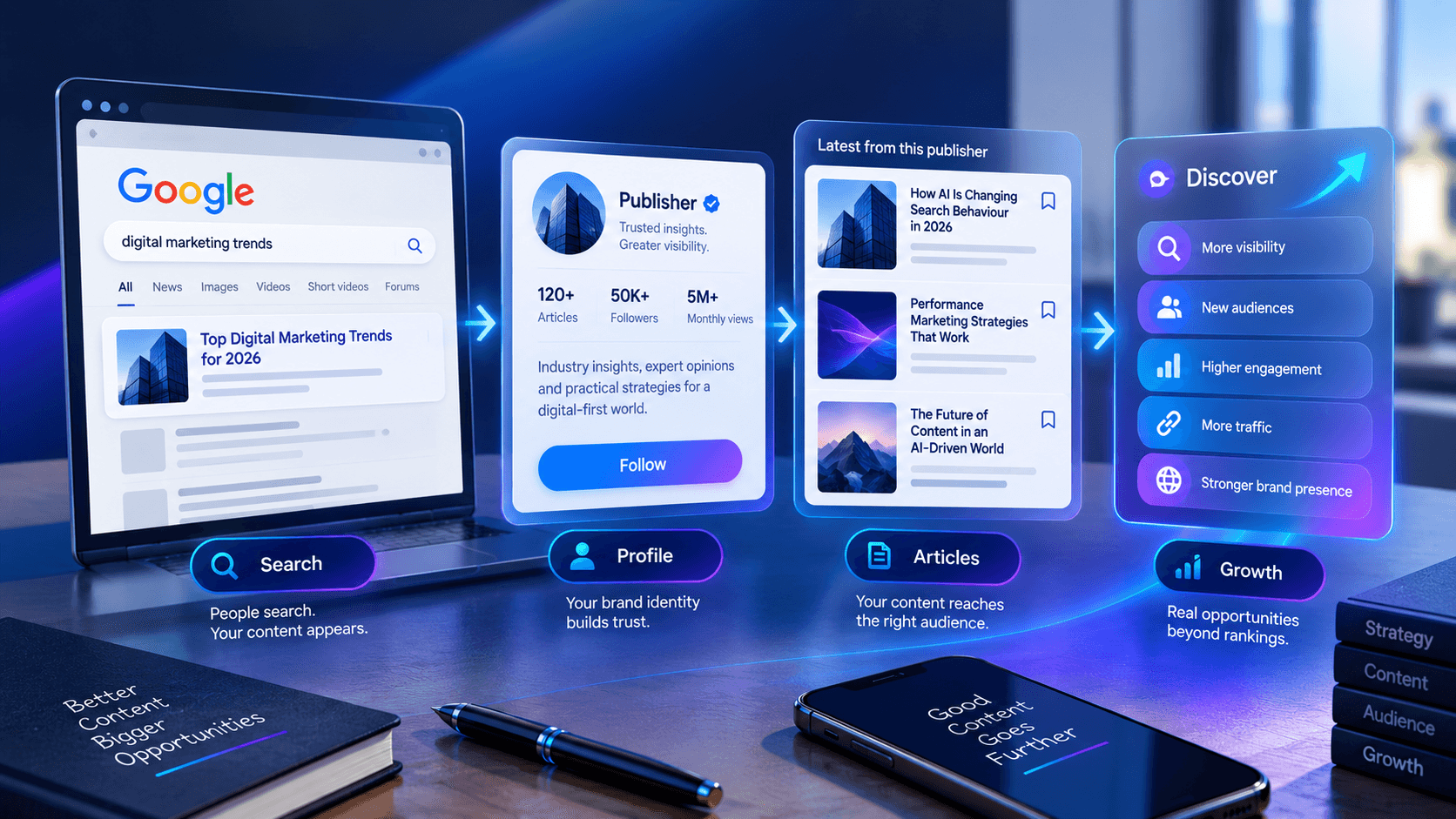
Google has just made Search Profiles more useful for publishers, and the timing matters. On September 16, 2026, Google introduced three updates designed to help publishers manage their profiles, showcase articles more effectively, and make the feature available to a wider group of creators and publications.
For publishers building traffic across Google Search, Discover, websites, and social platforms, this is more than a profile-design change. It gives publishers another place to present their brand, latest stories, and social presence directly within Google.
The biggest changes are simple: publishers can manage multiple brands from one account, articles now receive a stronger visual presentation, and the follower requirement has been reduced to 10,000 across eligible social platforms.
Here’s what the update means for publishers, SEO teams, and digital marketing professionals.
Table of Contents
What Changed in Google Search Profiles?
Why the New Article View Matters
One Account Can Now Manage Multiple Brands
Google Lowers the Eligibility Threshold
What This Means for Publisher SEO
How Publishers Can Prepare
FAQs
Key Takeaways
About Company
What Changed in Google Search Profiles?
Google introduced Search Profiles in June 2026 as a dedicated space where publishers and creators can bring together their latest articles, videos, social accounts, website, bio, and other important links.
The September update builds on that foundation.
The first major change is multi-account management. Publishers managing several publications or sub-brands can now manage their Search Profiles from one Google account instead of juggling separate logins. For media groups, agencies, and organizations with multiple digital properties, that can make everyday profile management much easier.
The second change focuses on article presentation. Google has updated how articles appear inside Search Profiles, including improved image thumbnails and longer headline displays. That matters because presentation influences whether someone pauses, scans, and chooses to read.
The third change is perhaps the biggest opportunity for growing publishers: Google has lowered the eligibility threshold to 10,000 followers across YouTube, Instagram, X, or TikTok for more U.S. publishers and creators. That brings Search Profiles within reach of a broader group of digital publishers.
Why the New Article View Matters
Publishers spend considerable time creating headlines, selecting images, and packaging stories for search and social platforms.
Google is now giving that content a more prominent home inside the Search Profile experience.
The improved article view gives headlines more room and optimizes thumbnails for the profile layout. That may sound like a small interface adjustment, but small changes in presentation can influence how quickly readers understand what a publisher offers.
Think of the Search Profile as a compact editorial storefront.
The headline is the window display. The image creates the visual cue. The publisher identity builds recognition. The article itself becomes the reason to step inside. That makes editorial packaging increasingly important.
A strong story still needs strong substance, but publishers also need to think about how their work appears when readers meet the brand outside the traditional search results page.
One Account Can Now Manage Multiple Brands
This is particularly relevant for publishing groups. Imagine a company managing a technology publication, a business publication, and several niche editorial brands. Previously, managing different Search Profiles could mean working across multiple Google accounts.
Google’s new multi-account support brings those profiles into a single management experience. That creates a cleaner workflow for editorial and marketing teams. It can also make brand governance easier. Teams can maintain accurate profile information, keep links current, and manage different publication identities without adding another layer of account administration.
For agencies working across multiple publishing brands, the change could also make profile management more practical.
Google Lowers the Eligibility Threshold
The eligibility change is likely to attract the most attention. Google says more U.S. publishers and creators can now access Search Profiles, with the follower threshold lowered to 10,000 across YouTube, Instagram, X, or TikTok.
The geographic detail matters. This does not mean every publisher worldwide can immediately claim a Search Profile. Google originally launched the feature in the U.S. and said it planned to expand access to more publishers and creators globally.
So publishers outside the current eligibility group should treat this as a feature worth watching rather than assume access is already available. For publishers that do qualify, however, the lower threshold creates a useful opportunity to strengthen their presence across Google's ecosystem.
What This Means for Publisher SEO
Search Profiles do not replace traditional SEO. They add another layer to how publishers present themselves on Google.
A publisher still needs useful content, clear headlines, strong site architecture, relevant internal links, solid technical SEO, and a consistent editorial strategy. But Search Profiles add another connection between a publisher's identity and its content.
Google says readers can follow publishers through their Search Profiles, and followed content linked from the profile can be more likely to appear in those users' Google Discover feeds. That makes audience relationships particularly interesting.
A publisher is no longer thinking only about getting an article to rank for a keyword. The bigger picture includes search visibility, content engagement, social audiences, Discover exposure, and direct connections with readers. This is where B2B Digital Marketing Services can support publishers that want to connect SEO, content, social media, and audience growth into one strategy.
Search Profiles Make Content Packaging More Important
There is another lesson hidden inside this update.
Publishers should think about every article as a complete content experience.
The headline needs to communicate value quickly. The featured image needs to support the story. The article needs a clear opening. The page should load smoothly. Internal links should guide readers toward useful next steps. And the publisher identity should remain consistent across the website and social channels. This is where Search Engine Marketing Services and organic search strategy can work alongside editorial planning.
Paid campaigns can bring attention to priority stories, while SEO and content help build lasting search visibility. Social channels can then extend the life of the same editorial asset. The channels work better when they share the same story rather than operating as separate islands.
How Publishers Can Prepare
The smartest response to this update is not to create content simply because Google introduced a new profile feature. Instead, publishers should look at the wider reader journey.
If a reader finds a story through Search, what happens next?
Can they quickly understand who published it? Can they explore related stories? Can they follow the publication? Is the website easy to navigate? Are social profiles consistent? Does the article encourage another useful click?
Those questions matter because traffic alone is only one part of publisher growth.
A reader who moves from Google to an article, reads another story, follows the publication, and returns later is far more valuable than a single page view. For publishers investing in social media marketing consulting services, Search Profiles also create an interesting bridge between social audiences and Google. The follower threshold itself highlights the connection: publishers can build an audience on social platforms and potentially use that audience strength to qualify for a stronger presence within Google Search.
What Publishers Should Watch Next
Google's Search Profile update is part of a wider shift toward richer publisher identities across Search and Discover.
The company has already introduced features that help people personalize what they see across Search, Discover, and Google News, including a Preferred Sources option that lets users follow specific websites more closely. That suggests publisher identity is becoming an increasingly visible part of the Google experience. For publishers, the opportunity is to connect the dots between content quality, brand recognition, search visibility, social audiences, and repeat readership.
A B2B Performance Marketing Agency can also play a role when publishers want to connect this organic visibility with paid campaigns, audience targeting, and measurable business outcomes.
The important point is simple: Search Profiles are not a replacement for SEO. They are another surface where strong publishing brands can present their content and build audience relationships.
Frequently Asked Questions
What are Google Search Profiles?
Google Search Profiles are dedicated spaces on Google where eligible publishers and creators can showcase their identity, website, social accounts, and latest content in one place.
What changed in Google Search Profiles in September 2026?
Google introduced multi-account management, improved article displays with optimized thumbnails and longer headlines, and lowered the follower eligibility threshold to 10,000 across YouTube, Instagram, X, or TikTok for more U.S. publishers and creators.
Can one Google account manage multiple Search Profiles?
Yes. Google now allows eligible publishers to manage profiles for multiple brands or sub-brands from one account.
Is the 10,000-follower threshold available worldwide?
Google's September announcement specifically refers to more U.S. publishers and creators becoming eligible. Google previously said it planned to expand Search Profiles to more publishers and creators globally.
Do Search Profiles replace SEO?
No. Search Profiles complement a broader SEO and content strategy. Publishers still need useful content, strong site structure, relevant links, compelling headlines, and a quality website experience.
Can Search Profiles help publishers reach Google Discover audiences?
Google says people can follow sources through Search Profiles, and content linked through those profiles can be more likely to appear for those audiences in Google Discover.
Key Takeaways
Google's latest Search Profile update gives publishers a more practical way to manage multiple brands, present articles, and connect with audiences.
The improved article layout puts more attention on headlines and images, while the 10,000-follower threshold opens eligibility to a wider group of U.S. publishers and creators.
For publishers, the bigger opportunity is to connect SEO, editorial content, social audiences, Discover, and brand identity rather than treating each channel separately.
The strongest strategy is still the same at its core: create content people want to read, package it clearly, make the website easy to use, and give readers a natural reason to explore more.
What This Google Update Means for Your Publishing Strategy
Search Profiles may look like a small addition to Google's ecosystem, but the update points toward a broader publishing experience where brand identity and content work more closely together.
Publishers that already have strong editorial content can use this opportunity to improve how their work is presented and connect their website with the audiences they have built across social platforms. If your brand is looking to connect SEO, paid search, social media, content, and audience growth into one measurable strategy, Stellix can help.
Related Articles
If you want to explore how Google Search changes connect with broader SEO and content strategies, these Stellix resources are useful next reads:
How Google Search Algorithm Updates Affect SEO Rankings: Understand how Google Search updates can influence visibility, content quality, and SEO strategy. Read the article.
Search Visibility Metrics That Matter Beyond Rankings: Learn how clicks, impressions, CTR, engagement, and organic traffic provide a broader view of search performance. Read the article.
SEO Content Refresh: 9 Steps to Grow Organic Traffic: Explore how refreshing existing content can improve search visibility and make established pages more valuable. Read the article.
About Stellix
Stellix is a performance-driven digital marketing agency helping businesses grow through SEO, PPC, website development, content marketing, and social media marketing. We combine data-backed strategies with creative execution to increase visibility and generate qualified leads. Ready to strengthen your search and digital growth strategy? Connect with the Stellix team to build a plan around your audience, content, and business goals.