Introduction
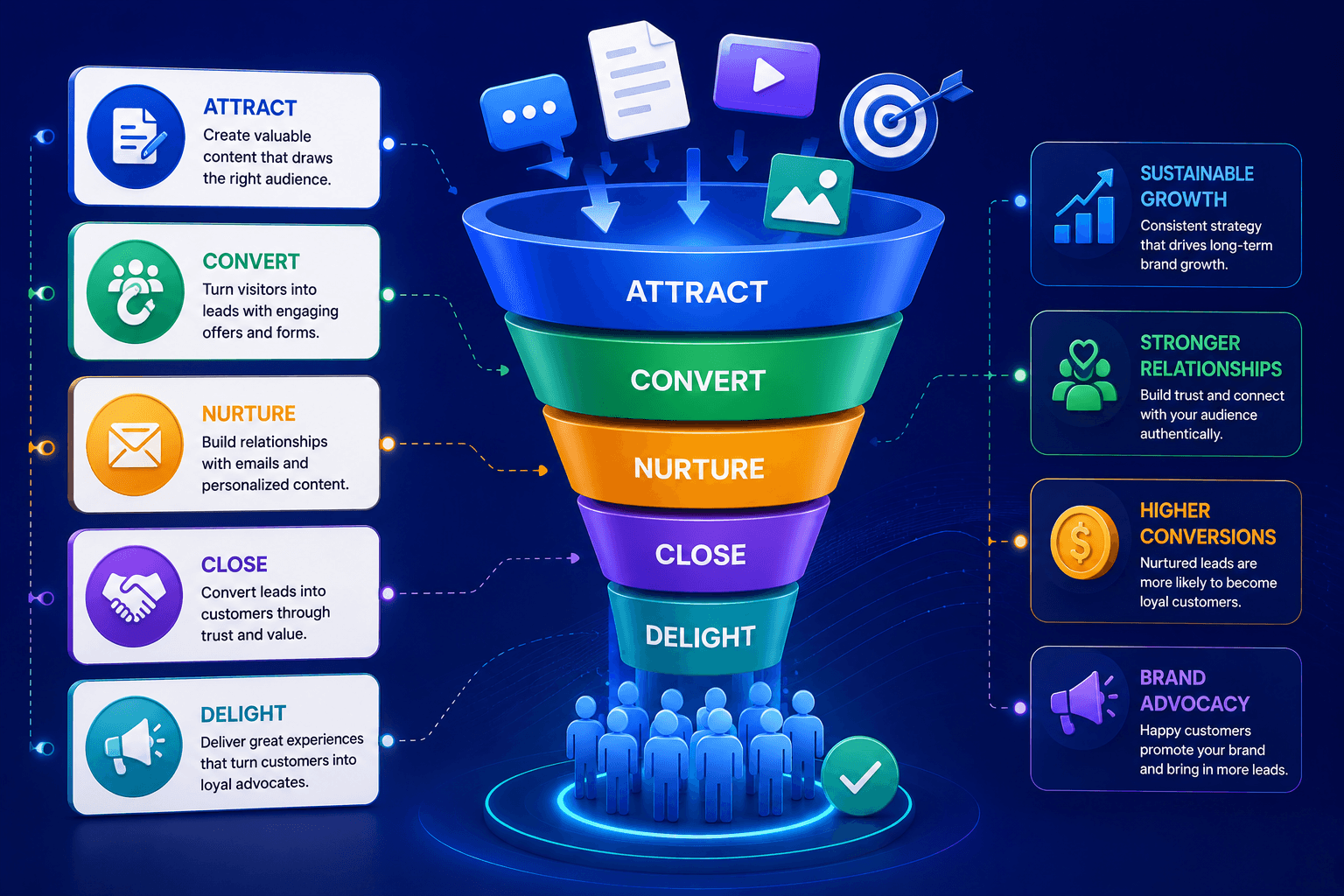
An effective inbound marketing strategy in 2026 is built around one simple idea: give people a compelling reason to discover, trust, and choose your brand. Instead of relying on one channel, modern inbound marketing connects SEO, helpful content, social media, email, AI-powered search, and performance marketing across the customer journey.
The biggest shift is that customers now research before they talk to a brand. They search Google, explore social platforms, compare providers, read reviews, ask AI tools questions, and consume multiple pieces of content before making a decision. That makes every useful interaction an opportunity to build familiarity. For businesses working with seo experts, a B2B Performance Marketing Agency, or an SEO and Performance Marketing Agency, inbound marketing can turn scattered digital activities into one connected growth engine.
Key Takeaways
A modern inbound marketing strategy connects SEO, content, social media, email, and performance marketing.
Helpful content should answer customer questions at different stages of the buying journey.
AI-powered search is creating new opportunities for brand discovery.
SEO and content should work together to build topical authority and qualified organic traffic.
First-party data can make email marketing and personalization more relevant.
B2B brands can combine educational content with performance campaigns to accelerate demand generation.
Consistent measurement helps teams identify which channels and content contribute to meaningful business outcomes.
Table of Contents
What Is an Inbound Marketing Strategy in 2026?
Why Inbound Marketing Matters for Brand Growth
Build a Customer-Led Content Strategy
Make SEO the Foundation of Discovery
Optimize Content for AI-Powered Search
Connect Content With Performance Marketing
Build Relationships Through Email Marketing
Turn Social Media Into a Discovery Channel
Measure the Entire Customer Journey
How to Build a Stronger Inbound Strategy
Frequently Asked Questions
The Future of Inbound Marketing
What Is an Inbound Marketing Strategy in 2026?
Inbound marketing is about creating valuable experiences that encourage potential customers to discover and engage with a brand naturally. The approach has evolved considerably.
A modern inbound strategy can include search-optimized articles, service pages, educational resources, social content, email campaigns, videos, webinars, case studies, AI-search visibility, and conversion-focused landing pages.
The important part is connection. Publishing a blog without understanding what your audience wants to know is simply publishing.
Publishing content that answers a real customer question, leads naturally to a relevant service, and continues the conversation through email or social media becomes marketing. That's the difference between content production and an inbound marketing strategy.
Why Inbound Marketing Matters for Brand Growth
People rarely make important purchasing decisions after seeing one piece of content.
A prospective customer may discover a brand through Google, visit its website, read an article, follow the company on LinkedIn, watch a video, compare competitors, and eventually request a consultation. Inbound marketing connects those moments. For B2B businesses, this journey can be particularly detailed. A decision-maker may need to understand the problem, evaluate different approaches, compare providers, involve colleagues, and build internal confidence before moving forward.
A B2B Performance Marketing Agency can support this journey by combining demand generation with content and paid acquisition. The result is a marketing system where each channel has a role rather than operating independently.
Build a Customer-Led Content Strategy
The strongest inbound content begins with customer questions.
Instead of asking, "What should we publish this week?" ask, "What does our audience need to understand before they choose us?"
That question changes the content strategy.
Early-stage content can introduce problems, opportunities, trends, and educational insights.
Mid-funnel content can explain solutions, processes, comparisons, frameworks, and use cases.
Decision-stage content can demonstrate expertise through case studies, service pages, testimonials, demonstrations, and detailed guides. This creates a content journey.
Someone discovers an educational article and can naturally move toward a deeper resource, then a relevant service page, and eventually a consultation. That's how content becomes an acquisition asset rather than a collection of disconnected posts.
Make SEO the Foundation of Discovery
SEO remains one of the strongest foundations for inbound marketing because it connects valuable content with people actively searching for information.
Modern SEO goes beyond inserting keywords into articles.
Search intent, topical authority, internal linking, technical performance, structured content, useful information, and expertise all contribute to a stronger organic presence. This is where experienced seo experts can add strategic value.
Rather than creating hundreds of disconnected pages, the focus should be on building meaningful topic clusters. For example, a digital marketing brand could develop interconnected resources around SEO, performance marketing, AI search, content strategy, paid media, and conversion optimization. Each useful resource strengthens the overall knowledge ecosystem. The result is a website that becomes increasingly valuable to both search users and the business
Optimize Content for AI-Powered Search
AI is adding another layer to inbound discovery.
People can now ask conversational questions and receive synthesized answers containing information from multiple sources. That means brands should think beyond traditional keyword rankings.
Content should provide clear answers, demonstrate genuine expertise, explain concepts thoroughly, use logical structure, and support claims with credible information. This is where AI-focused optimization becomes part of the inbound strategy.
A well-structured article can attract traditional organic traffic while also becoming useful source material for AI-powered search experiences. For an SEO and Performance Marketing Agency, combining traditional search optimization with AI visibility can create a more comprehensive approach to digital discovery.
Connect Content With Performance Marketing
Inbound marketing and performance marketing are often treated as separate disciplines. They work better together.
Organic content can reveal which topics attract strong search interest.
Paid campaigns can amplify high-value content and offers.
Performance data can reveal which audiences and messages generate meaningful actions. Those insights can then inform future content. For example, an article generating strong organic engagement around a particular customer problem could become the foundation for a paid campaign.
A successful paid advertisement could reveal messaging that deserves its own SEO-focused article. This creates a continuous feedback loop between content and advertising. That's particularly valuable for companies working with a B2B Performance Marketing Agency.
Build Relationships Through Email Marketing
Inbound marketing shouldn't end when someone visits your website.
Email provides a direct way to continue the relationship.
Someone who downloads a guide, subscribes to a newsletter, registers for a webinar, or requests a resource has already demonstrated interest.
The next step is providing useful information that matches that interest.
A B2B brand might share educational content, industry insights, case studies, product updates, and practical recommendations. The goal is relevance.
An email should feel like a useful continuation of the customer's research rather than an interruption. Over time, consistent value can turn an initial website visit into a much stronger relationship.
Turn Social Media Into a Discovery Channel
Social platforms can extend the reach of inbound content.
A detailed article can become a LinkedIn post.
A research insight can become a short video.
A customer question can become a carousel.
A webinar can become several educational clips.
This approach creates more opportunities for people to discover the same expertise in formats they already enjoy consuming.
For B2B brands, LinkedIn can be particularly useful for distributing thought leadership, industry perspectives, case studies, and expert insights. The key is not to simply duplicate content across platforms. Adapt the idea to the behavior of each audience.
Measure the Entire Customer Journey
Inbound marketing becomes more effective when measurement goes beyond website traffic.
Traffic tells you how many people arrived.
Engagement tells you whether they found value.
Conversions show whether they took meaningful action.
Revenue connects marketing activity with business growth.
Useful measurements can include organic sessions, engaged sessions, conversion rates, qualified leads, email engagement, assisted conversions, customer acquisition cost, pipeline contribution, and revenue.
For businesses working with an SEO and Performance Marketing Agency, connecting these metrics can provide a much clearer view of how organic and paid channels work together. The goal is to understand the journey rather than obsess over one isolated metric.
How to Build a Stronger Inbound Marketing Strategy
Start with your ideal customer's journey. Understand what they search for, what questions they ask, which information helps them evaluate options, and what ultimately gives them confidence to take action. Then build content around those moments.
Connect every major piece of content to a logical next step. Improve internal linking. Create supporting resources. Strengthen service pages. Repurpose valuable insights across social media and email.
Bring paid media into the system when useful.
Use analytics to understand what works.
Then refine the strategy continuously.
The best inbound programs aren't built around publishing more.
They're built around creating more value from every meaningful customer interaction.
Frequently Asked Questions
What is an inbound marketing strategy?
An inbound marketing strategy uses valuable content, SEO, social media, email, and other digital channels to attract potential customers, build trust, encourage engagement, and guide people toward meaningful business actions.
Why is inbound marketing important in 2026?
Customers have more ways to research brands than ever. A strong inbound strategy helps businesses remain discoverable across search engines, social platforms, websites, email, and AI-powered search experiences.
How does SEO support inbound marketing?
SEO helps connect useful content with people actively searching for relevant information. It can support discovery, organic traffic, topical authority, and long-term brand visibility.
How does AI search affect inbound marketing?
AI-powered search creates additional discovery opportunities. Brands can strengthen their presence by creating clear, authoritative, well-structured content that directly addresses customer questions.
Can inbound and performance marketing work together?
Absolutely. Organic content can provide insights for paid campaigns, while performance data can reveal valuable audiences, messaging, and topics for future content.
How long does inbound marketing take to produce results?
Results vary based on industry, competition, website authority, content quality, distribution, and consistency. SEO and content can build cumulative value over time, while paid campaigns can provide faster feedback.
What role does a B2B Performance Marketing Agency play?
A B2B Performance Marketing Agency can connect paid acquisition, audience strategy, content, conversion optimization, analytics, and lead-generation campaigns to support the broader inbound journey.
The Future of Inbound Marketing Is Customer-Led
Inbound marketing in 2026 is becoming more connected, intelligent, and customer-focused.
SEO creates discovery.
Content builds expertise.
AI search creates new visibility opportunities.
Social media expands reach.
Email develops relationships.
Performance marketing accelerates demand.
Analytics connects these activities with measurable outcomes.
The strongest brands won't treat these channels as separate marketing tasks. They'll build an ecosystem where each interaction supports the next stage of the customer journey.
For businesses working with seo experts, a B2B Performance Marketing Agency, or an SEO and Performance Marketing Agency, the opportunity is to create a strategy that attracts the right audience, provides genuine value, and turns attention into sustainable growth.
Ready to turn your inbound strategy into a measurable growth engine?
Stellix combines SEO, content marketing, performance marketing, paid media, website strategy, and AI-focused search optimization to help ambitious brands increase visibility and attract high-intent audiences.
Let's talk about your growth goals. Book a Strategy Call with Stellix and build an inbound marketing strategy designed for 2026.
About Stellix
Stellix is a performance-driven digital marketing agency helping ambitious brands grow through SEO, paid media, content marketing, website development, performance marketing, and AI-focused search strategies. By combining data-backed insights, technical expertise, and creative thinking, Stellix develops customized marketing solutions designed to increase visibility, attract high-intent audiences, and deliver measurable business results. Whether you're expanding locally, growing nationally, or building a global digital presence, Stellix creates strategies designed for sustainable growth.