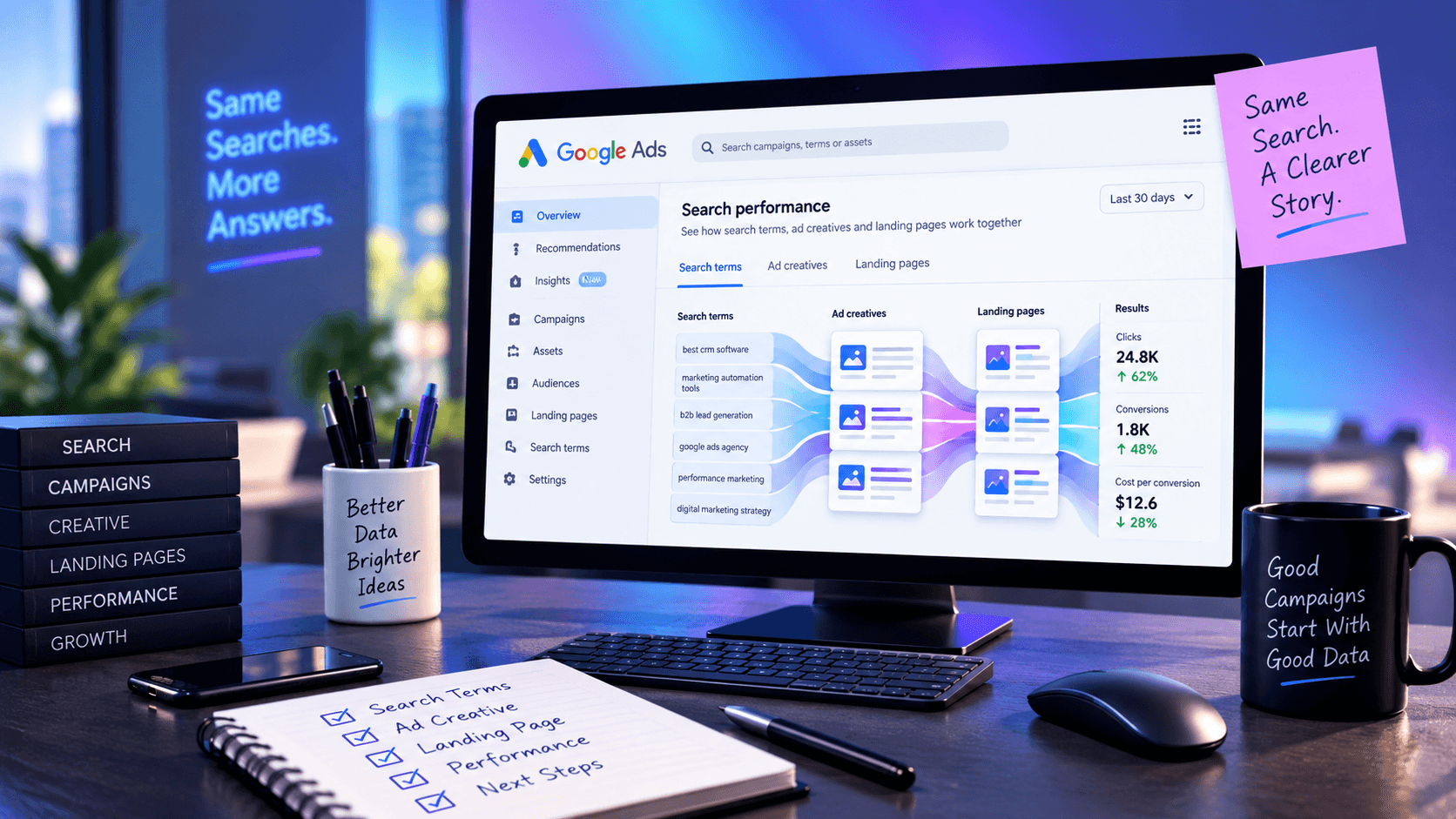
Google Ads is giving advertisers a clearer way to understand what happens between a search, an ad click, and a website visit.
On September 23, 2026, Google announced a new reporting feature that connects three important parts of the Search ads journey: the search term, the ad creative, and the landing page.
That may sound like a reporting improvement. The more interesting part is what it allows advertisers to see.
Instead of reviewing search terms, ads, and landing pages as separate pieces, marketers can get a more connected picture of how those elements work together.
For advertisers managing paid search campaigns, this can make campaign analysis more useful. It can also shift the conversation from simply asking which keyword received a click to asking whether the search, message, and destination worked together. And that is where this update gets interesting.
What Google Changed
Google's new reporting view is being introduced for AI Max for Search campaigns.
The important news, however, is not simply the introduction of another AI Max feature. The real change is the way Google is bringing more context into Search performance reporting.
The new view is designed to connect the search a person makes with the creative they see and the landing page they reach.
Google says more details and availability will follow later this year.
For advertisers, that means campaign data can be viewed more like a customer journey rather than a collection of individual metrics.
The difference may sound subtle.
In practice, it can change the questions marketers ask when reviewing campaign performance.
The Three Signals Google Is Connecting
Think about a typical Search journey.
Someone searches for a service.
They see an ad.
They click.
They arrive on a website.
Those steps are closely connected from the user's perspective, but marketers have often reviewed the data behind them in separate reports.
Google's new reporting direction brings those pieces closer together.
The search term
The search term shows what the person actually wanted at that moment. It can reveal whether someone is researching, comparing options, looking for a specific service, or showing stronger purchase intent. That context matters because two searches can look similar while representing very different stages of the buyer journey.
The ad creative
The next piece is the message the person sees.
The headline and other creative elements influence whether the search result feels relevant enough to earn the click.
A search term can be highly relevant, but the ad still needs to communicate a useful reason to continue.
The landing page
Then comes the destination.
The landing page needs to continue the conversation started by the search and the ad.
If someone searches for a specific service and the ad speaks directly to that need, sending them to a broad homepage creates a very different experience from sending them to a focused service page.
The keyword has not changed.
The journey has.
That is exactly why connecting these three signals is useful.
Why This Matters for Advertisers
Search advertising has traditionally encouraged a keyword-first mindset.
Advertisers select keywords, create ads, review clicks and conversions, and then optimize the campaign. That approach still has value.
But Google's Search campaigns are becoming increasingly automated, which means advertisers need better ways to understand how those systems are connecting users with ads and website destinations.
The new reporting view can help answer a more useful question:
Which combinations of search intent, creative, and landing page are producing meaningful results?
That is a much richer question than simply asking which keyword received the most clicks.
A campaign does not exist in a spreadsheet. It exists in the journey between what someone wants, what they see, and what happens after the click.
AI Max: Where This Update Fits
This reporting feature sits within AI Max for Search campaigns, Google's suite of AI-powered capabilities for Search.
AI Max can support areas such as search-term matching, text customization, and Final URL Expansion.
Google describes AI Max as an optimization layer for existing Search campaigns rather than a separate campaign type. For this particular update, that distinction matters.
The story is not really about learning every feature inside AI Max. It is about Google giving advertisers more visibility into the relationship between search activity, ad creative, and landing pages. AI Max is simply where this new reporting capability fits.
What Advertisers Can Learn From the New View
The value of the update comes from the connections.
Start with search intent.
If certain searches repeatedly appear alongside strong engagement or conversions, they can reveal themes worth understanding more closely.
Then look at the creative.
Which messages are appearing for those searches? Do they reflect what the searcher is actually looking for?
Then look at the landing page.
Does the destination continue the promise made by the ad?
This creates a simple chain:
Search → Message → Landing Page → Business Outcome
When those pieces align, the data becomes much easier to interpret.
And there is a useful lesson here for advertisers: a high click-through rate is interesting, but it becomes much more meaningful when the resulting traffic fits the business.
A clever ad that attracts the wrong audience is still a clever way to spend a budget.
Why This Matters for B2B Campaigns
This update is particularly relevant to B2B advertisers because the buying journey usually involves several interactions.
Someone might search for a service, visit a website, read an article, compare providers, return through a branded search, and eventually submit an enquiry.
The first click is rarely the entire story.
For brands investing in B2B Digital Marketing Services, Google Ads data becomes more valuable when it connects with website behaviour, content engagement, lead quality, and sales outcomes.
Paid search should not operate as an isolated marketing channel. It should connect with the wider customer journey. This is also where Search Engine Marketing Services can move beyond campaign management and support a broader approach to search intent, ad messaging, landing pages, and conversion measurement.
The Landing Page Still Has a Big Job
The reporting update also puts more attention on the relationship between advertising and the website.
Google's AI Max capabilities include Final URL Expansion, which can select relevant pages based on the user's search intent. That makes website structure an important part of the paid-search experience.
If a business has clear service pages, industry pages, location pages, and useful supporting content, there are more relevant destinations available for different searches. But technology can only take the experience so far.
The page still needs to deliver what the ad promised.
Your ad gets the person through the door.
The landing page has to give them a reason to stay.
Stellix Perspective: Think Journey, Not Just Campaign
At Stellix, we look at this slightly differently.
Instead of asking only:
“How is the Google Ads campaign performing?”
we would ask:
“Which search-to-message-to-page combinations are creating meaningful business outcomes?”
That small change in perspective can make campaign analysis far more useful.
One campaign may generate plenty of impressions and clicks but attract searches that sit far from the actual offer.
Another may generate fewer clicks while bringing visitors who explore relevant pages, engage with content, and become qualified leads. That is why paid search strategy works best when it shares a clear understanding of audience intent with the rest of the marketing plan.
For businesses combining paid search with professional SEO services, content marketing, and website development, the same customer journey should guide each channel. The tactics can differ. The customer should not have to.
What Advertisers Should Watch Next
The September update is another step in Google's wider move toward AI-assisted Search advertising.
The next thing worth watching is how advertisers use the new reporting capability once it becomes available.
The most useful insights will likely come from connecting the data rather than reviewing individual metrics in isolation.
Search terms can show intent.
Creative data can show message relevance.
Landing-page data can show destination quality.
Conversion data can show business value.
Put those pieces together, and campaign performance starts telling a much clearer story.
For companies working with a B2B Performance Marketing Agency, this connected view can also bring paid media, creative, landing pages, analytics, and business outcomes into one conversation.
Frequently Asked Question
What did Google change in Google Ads?
Google announced a new reporting feature on September 23, 2026 that connects search terms, ad creative, and landing pages to provide a more connected view of the Search ads journey.
Is the new reporting feature part of AI Max?
Yes. Google is introducing the new reporting capability for AI Max for Search campaigns.
Is this an AI Max guide?
No. AI Max is relevant because it is the environment where the reporting update is being introduced. The main focus is the new way advertisers can understand Search performance.
Why does connecting search terms and landing pages matter?
It gives advertisers more context around the customer journey. Instead of reviewing a search term, ad, and landing page separately, marketers can consider how those elements work together.
Does CTR still matter?
Yes. CTR remains a useful Search advertising metric. However, advertisers should also consider conversions, lead quality, conversion value, and other business outcomes when evaluating campaign performance.
Key Takeaways
Google's latest update connects three important parts of Search advertising: what people search, what they see, and where they land.
The new reporting capability is being introduced through AI Max for Search campaigns, but the wider story is about better visibility into the customer journey.
For advertisers, this means campaign analysis can move beyond isolated keyword metrics and toward a clearer understanding of how search intent, creative messaging, landing pages, and business outcomes connect.
The question is no longer simply:
“Which keyword performed?”
It is becoming:
“Which search-to-message-to-page journey produced the right result?”
That is a much more useful question to take into the next Google Ads review.
What This Google Ads Update Means for Your Strategy
Better reporting gives marketers more context.
The real value comes from what they do with that context. If your paid search strategy needs a stronger connection between search intent, ad messaging, landing pages, and business results, Stellix can help bring those pieces together.
Explore Stellix's Performance Marketing Services and build a Google Ads strategy around the customer journeys that matter to your business.
Related Stellix Reading
How Google Ads Optimization Services Improve ROI
Google Ads Optimization Services That Improve Campaign Performance
For more search, paid media, and digital marketing insights, explore the Stellix Blog.