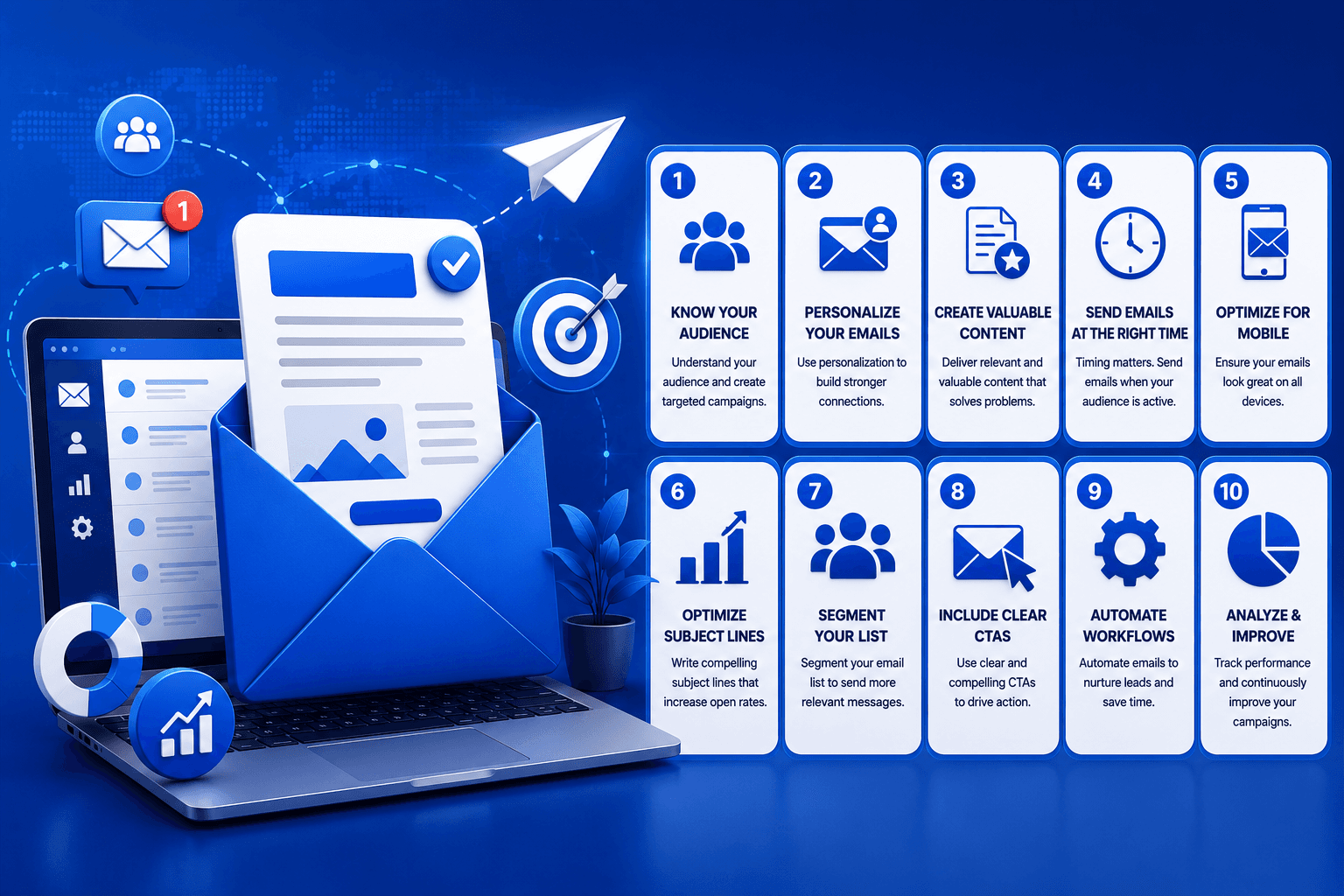
Email continues to be one of the few marketing channels in which brands own the relationship with the audience. Algorithms change, platforms evolve, and trends come and go, yet email remains a direct line to customers. The challenge isn't getting into the inbox; it's creating messages people genuinely want to open, read, and act on.
Businesses investing in Email Marketing Strategies and broader B2B Digital Marketing Services often discover that engagement isn't driven by sending more emails. It's driven by sending smarter emails. The brands generating the highest open rates, click-through rates, and conversions focus on relevance, timing, personalization, and value. If your goal is to increase engagement, strengthen customer relationships, and create a marketing channel that consistently delivers results, these strategies can help transform email from a communication tool into a growth engine.
Table of Contents
Why Email Marketing Still Delivers Exceptional Results
Strategy 1: Start With Audience Segmentation
Strategy 2: Personalization Beyond First Names
Strategy 3: Write Subject Lines That Spark Curiosity
Strategy 4: Focus on Value Before Promotion
Strategy 5: Use Behavioral Triggers
Strategy6: Optimize Send Times Intelligently
Strategy7: Create Mobile-First Email Experiences
Strategy 8: Build Automated Nurture Sequences
Strategy 9: Test, Learn, and Refine Continuously
Strategy 10: Combine Email With Your Wider Marketing Strategy
Why Engagement Matters More Than Ever
Key Takeaways
Frequently Asked Questions
Conclusion
About Company
Why Email Marketing Still Delivers Exceptional Results
Despite the rise of countless marketing channels, email continues to generate impressive returns because it creates direct conversations with audiences who have already expressed interest in your brand. Unlike rented audiences on social platforms, email subscribers have actively chosen to hear from you. That creates an incredible opportunity. Every email becomes a chance to educate, inspire, inform, and build trust. When executed effectively, email marketing supports customer acquisition, retention, loyalty, and revenue growth simultaneously.
Strategy 1: Start With Audience Segmentation
One-size-fits-all emails rarely create exceptional engagement. The highest-performing campaigns recognize that subscribers have different interests, behaviors, and goals. Segmenting audiences based on demographics, engagement history, purchase behavior, industry, or lifecycle stage allows marketers to send highly relevant messages. Relevance drives engagement. The more aligned your content is with subscriber interests, the more likely recipients are to interact with your emails.
Strategy 2: Personalization Beyond First Names
Most people have seen emails that start with their name. Personalization goes much further. Modern email marketing uses customer behavior, preferences, previous interactions, and interests to create tailored experiences. Product recommendations, customized content suggestions, and targeted messaging help subscribers feel understood. Personalized communication often feels more like a helpful conversation and less like a marketing message. That's a powerful distinction.
Strategy 3: Write Subject Lines That Spark Curiosity
The subject line acts as the front door to your email. Even the most valuable content needs an invitation compelling enough to encourage an open. Effective subject lines create curiosity, highlight benefits, ask relevant questions, or offer valuable insights. The goal isn't simply attracting attention; it's setting accurate expectations while encouraging engagement.
Think of subject lines as headlines.
A great headline earns the click.
A great email earns the relationship.
Strategy 4: Focus on Value Before Promotion
Subscribers join email lists because they expect value. The brands generating strong engagement consistently prioritize helpful content before promotional messaging.
Educational insights, industry trends, actionable advice, exclusive resources, and useful recommendations often outperform purely promotional emails because they strengthen trust. When audiences receive consistent value, promotional offers become significantly more effective. Trust amplifies results.
Strategy 5: Use Behavioral Triggers
Behavioral triggers create some of the most engaging email experiences available today. These emails respond to actions users have already taken.
A website visit.
A resource download.
A product inquiry.
A completed purchase.
Because triggered emails align closely with user intent, they often achieve impressive engagement rates. The timing feels natural because the communication reflects existing interest.
Strategy 6: Optimize Send Times Intelligently
Timing influences engagement more than many marketers realize. While there is no universal "perfect" send time, understanding audience behavior provides valuable insights. Some audiences engage early in the morning, while others interact during lunch breaks or later in the evening. The most effective marketers continuously analyze performance data to identify patterns. Data-driven timing helps maximize visibility without increasing email volume.
Strategy 7: Create Mobile-First Email Experiences
A significant percentage of emails are opened on mobile devices. That means readability, design, and user experience matter immensely. Successful email campaigns use concise copy, clean layouts, responsive design, and clear calls to action. Mobile-friendly emails feel effortless to consume, creating a smoother experience for subscribers. Convenience encourages engagement. The easier an email is to read, the more likely recipients are to interact with it.
Strategy 8: Build Automated Nurture Sequences
Not every subscriber is ready to make an immediate decision. That's where nurture sequences shine. Well-designed automation workflows guide subscribers through a thoughtful journey filled with valuable content, educational resources, and relevant insights. Rather than overwhelming audiences, nurture campaigns build familiarity gradually. This approach supports stronger relationships while creating meaningful opportunities for future conversions.
Strategy 9: Test, Learn, and Refine Continuously
The most successful email marketers rarely rely on assumptions.
They test.
Subject lines.
Email layouts.
Call-to-action placement.
Content formats.
Send times.
Audience segments.
Even small improvements can create meaningful performance gains over time. Continuous optimization allows marketers to discover what resonates most effectively with their audience. Growth often comes from incremental improvements compounded consistently.
Strategy 10: Combine Email With Your Wider Marketing Strategy
Email performs best when connected to a broader marketing ecosystem. Content marketing, SEO, paid advertising, social media, webinars, and lead generation campaigns all contribute valuable opportunities for email engagement. Businesses investing in B2B Digital Marketing Services often see stronger results when email supports the full customer journey rather than operating independently. Integrated strategies create cohesive experiences that strengthen every touchpoint.
Why Engagement Matters More Than Ever
Engagement is more than an email metric. It reflects audience interest, brand trust, and content relevance. Highly engaged subscribers are more likely to visit websites, consume content, participate in events, explore services, and become loyal customers. Every click represents an opportunity to deepen the relationship. That is why successful Email Marketing Strategies focus on creating genuine value rather than simply increasing send frequency. The objective isn't inbox presence. It's audience connection.
Key Takeaways
Strong email engagement is built through relevance, personalization, value, and consistency. Audience segmentation, behavioral triggers, mobile optimization, automation, and continuous testing all contribute to stronger performance. Businesses that integrate Email Marketing Strategies into broader B2B Digital Marketing Services often create more meaningful customer relationships and sustainable growth.
Frequently Asked Questions
Why is email marketing still effective?
Email provides direct access to subscribers who have already expressed interest in your brand, making it highly effective for engagement and relationship building.
What is the most important email marketing strategy?
Audience segmentation is often one of the most impactful strategies because it improves relevance and personalization.
How often should businesses send emails?
Frequency depends on audience expectations, content quality, and business goals. Consistency and value are typically more important than volume.
What increases email engagement?
Relevant content, personalized messaging, compelling subject lines, strong design, and strategic timing all contribute to higher engagement.
How does email support B2B marketing?
Email nurtures prospects, strengthens relationships, educates buyers, and supports longer sales cycles commonly found in B2B environments.
Conclusion
The most effective Email Marketing Strategies focus on creating value at every interaction. When personalization, relevance, automation, and thoughtful communication work together, engagement naturally follows. Businesses looking to strengthen customer relationships and maximize results through integrated Email Marketing Consulting Services can benefit significantly from a strategic approach to email marketing. If you're ready to elevate your email performance, let's start the conversation.
About Stellix
Stellix is a performance-driven digital marketing agency helping businesses grow through SEO, PPC, website development, content marketing, and social media marketing. We combine data-backed strategies with creative execution to increase visibility, generate qualified leads, and drive measurable business growth. Ready to scale your digital presence? Visit www.stellix.io or contact our team to discuss your growth goals and discover how Stellix can help your business achieve sustainable success.
Read Next: Content Marketing Trends 2026